Filter by

Charles Darwin's On The Origin of Species
Part of the non-fiction series Words that Changed the World, this book is an accessible guide to the theory of evolution, presented in an attractive format with beautiful illustrations throughout. Written by Anna Brett and richly illustrated by Nick Hayes, it lets the young reader discover how Darwin changed our understanding of the human race – and our place within the animal kingdom – wi…
- Edition
- -
- ISBN/ISSN
- 9781786278869
- Collation
- -
- Series Title
- -
- Call Number
- 900

Ali : a life
Muhammad Ali was born Cassius Clay in racially segregated Louisville, Kentucky, the son of a sign painter and a housekeeper. He went on to become a heavyweight boxer with a dazzling mix of power and speed, a warrior for racial pride, a comedian, a preacher, a poet, a draft resister, an actor, and a lover. Millions hated him when he changed his religion, changed his name, and refused to fight in…
- Edition
- -
- ISBN/ISSN
- 9781328505699
- Collation
- 623 p. : ill. ; 23 cm.
- Series Title
- -
- Call Number
- 927.9 EIG a
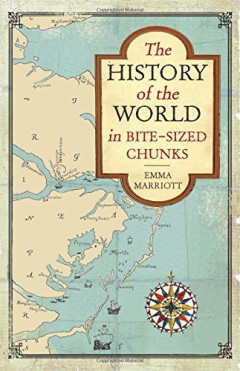
The History of the World in Bite-Sized Chunks
History is a rich, varied, and fascinating subject, so it's rare to find the whole lot in one book . . . until now. The History of the World in Bite-Sized Chunks pulls it all together, from the world's earliest civilizations in 3500 BC to the founding of the United Nations in 1945, passing by the likes of Charlemagne, the Ottoman Empire, and the Crimean War, to name a few. Here's your chance to…
- Edition
- -
- ISBN/ISSN
- -
- Collation
- 192 p. : ill. ; 20 cm
- Series Title
- -
- Call Number
- 900 MAR h

The Long Walk: The True Story of a Trek to Freedom
SlavomirRawicz was a young Polish cavalry officer. On 19 November 1939 he was arrested by the Russians and, after brutal interrogation and a farce of a trial, he was sentenced to 25 years' hard labour in the Gulags. After a three-month journey to Siberia in the depths of winter he escaped with six companions, realizing that to stay in the camp meant almost certain death. In June 1941 they cr…
- Edition
- -
- ISBN/ISSN
- 9781845296445
- Collation
- 278 p., : 20 cm.
- Series Title
- -
- Call Number
- 904 RAW l
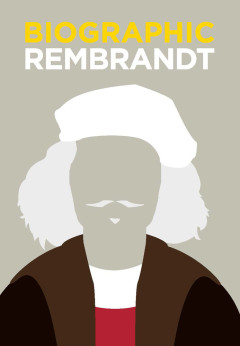
Biographic: Rembrandt
Rembrandt presents an instant portrait of his life and work, with an array of irresistible facts and figures converted into infographics to reveal the artist behind the pictures.
- Edition
- -
- ISBN/ISSN
- 9781781453025
- Collation
- 95 p. : col. ill. ; 22 cm.
- Series Title
- -
- Call Number
- 927.5 COL b
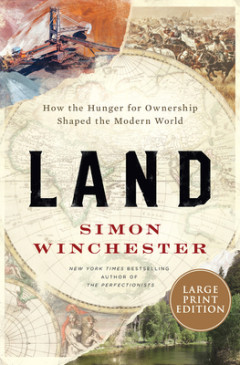
Land : how the hunger for ownership shaped the modern world
“In many ways, Land combines bits and pieces of many of Winchester’s previous books into a satisfying, globe-trotting whole. . . . Winchester is, once again, a consummate guide.”— Boston Globe The author of The Professor and the Madman, The Map That Changed the World , and The Perfectionists explores the notion of property—bought, earned, or received; in Europe, Africa, North Ame…
- Edition
- -
- ISBN/ISSN
- 9780063063013
- Collation
- 671 p. : 23 cm.
- Series Title
- -
- Call Number
- 907 WIN l

Biographic: Dickens
Most people know that Charles Dickens (1812–1870) was one of the greatest novelists of the Victorian era, whose works include David Copperfield and Great Expectations. What, perhaps, they don't know is that he invented more than 200 original words and phrases; that he always slept facing north, in an effort to battle insomnia; that he sent more than 14,000 letters in his lifetime; and that he…
- Edition
- -
- ISBN/ISSN
- 9781781453643
- Collation
- 95 p. : col. ill. ; 25 cm.
- Series Title
- -
- Call Number
- 920 RPB b

Wild Swans: Three Daughters of China
The story of three generations in twentieth-century China that blends the intimacy of memoir and the panoramic sweep of eyewitness history—a bestselling classic in thirty languages with more than ten million copies sold around the world, now with a new introduction from the author. An engrossing record of Mao’s impact on China, an unusual window on the female experience in the modern wor…
- Edition
- -
- ISBN/ISSN
- 9780743246989
- Collation
- 562 p, : 21 cm.
- Series Title
- -
- Call Number
- 951 CHA w

The Boys Who Challenged Hitler : Knud Pedersen and the Churchill Club
At the outset of World War II, Denmark did not resist German occupation. Deeply ashamed of his nation's leaders, fifteen-year-old Knud Pedersen resolved with his brother and a handful of schoolmates to take action against the Nazis if the adults would not. Naming their secret club after the fiery British leader, the young patriots in the Churchill Club committed countless acts of sabotage, infu…
- Edition
- -
- ISBN/ISSN
- 9780374300227
- Collation
- 198 p. : ill. ; 24 cm.
- Series Title
- -
- Call Number
- 940.54 HOO b

Children's World History Encyclopedia
- Edition
- -
- ISBN/ISSN
- 9781407587813
- Collation
- -
- Series Title
- -
- Call Number
- 903 GAN c
- Edition
- -
- ISBN/ISSN
- 9781407587813
- Collation
- -
- Series Title
- -
- Call Number
- 903 GAN c
Then and Now : a world history of how people lived from ancient times to the …
- Edition
- -
- ISBN/ISSN
- 9781472321978
- Collation
- -
- Series Title
- -
- Call Number
- 909 THE
- Edition
- -
- ISBN/ISSN
- 9781472321978
- Collation
- -
- Series Title
- -
- Call Number
- 909 THE
The World Wars
- Edition
- -
- ISBN/ISSN
- 9781842368091
- Collation
- -
- Series Title
- -
- Call Number
- 909 MAT w
- Edition
- -
- ISBN/ISSN
- 9781842368091
- Collation
- -
- Series Title
- -
- Call Number
- 909 MAT w
All About China
- Edition
- -
- ISBN/ISSN
- 9780804841214
- Collation
- -
- Series Title
- -
- Call Number
- 951 BRA a
- Edition
- -
- ISBN/ISSN
- 9780804841214
- Collation
- -
- Series Title
- -
- Call Number
- 951 BRA a
Life in the Viking Age
- Edition
- -
- ISBN/ISSN
- 0276421337
- Collation
- -
- Series Title
- -
- Call Number
- 948.022 HEA l
- Edition
- -
- ISBN/ISSN
- 0276421337
- Collation
- -
- Series Title
- -
- Call Number
- 948.022 HEA l
An Ancient Land Prehistory Vikings
- Edition
- -
- ISBN/ISSN
- 9780199108282
- Collation
- -
- Series Title
- -
- Call Number
- 948 Cor a
- Edition
- -
- ISBN/ISSN
- 9780199108282
- Collation
- -
- Series Title
- -
- Call Number
- 948 Cor a
Eyewitness: Victorians
- Edition
- -
- ISBN/ISSN
- 9780751364804
- Collation
- -
- Series Title
- -
- Call Number
- 941
- Edition
- -
- ISBN/ISSN
- 9780751364804
- Collation
- -
- Series Title
- -
- Call Number
- 941
70 Years Later D-Day
- Edition
- -
- ISBN/ISSN
- -
- Collation
- -
- Series Title
- -
- Call Number
- 940.54 YEA
- Edition
- -
- ISBN/ISSN
- -
- Collation
- -
- Series Title
- -
- Call Number
- 940.54 YEA

Gory Stories: Plague and Peril
- Edition
- -
- ISBN/ISSN
- 9781407109565
- Collation
- 140p;ill.
- Series Title
- Horrible Histories
- Call Number
- 940
- Edition
- -
- ISBN/ISSN
- 9781407109565
- Collation
- 140p;ill.
- Series Title
- Horrible Histories
- Call Number
- 940
Ancient Greece
- Edition
- -
- ISBN/ISSN
- 9780751347388
- Collation
- -
- Series Title
- -
- Call Number
- 938 PEA a
- Edition
- -
- ISBN/ISSN
- 9780751347388
- Collation
- -
- Series Title
- -
- Call Number
- 938 PEA a
British King & Queens
- Edition
- -
- ISBN/ISSN
- 9781848980631
- Collation
- -
- Series Title
- -
- Call Number
- 941.099 GUY b
- Edition
- -
- ISBN/ISSN
- 9781848980631
- Collation
- -
- Series Title
- -
- Call Number
- 941.099 GUY b
DK Eyewiness Guides:Shakespeare
- Edition
- -
- ISBN/ISSN
- 9780751330861
- Collation
- -
- Series Title
- -
- Call Number
- 920 Chr s
- Edition
- -
- ISBN/ISSN
- 9780751330861
- Collation
- -
- Series Title
- -
- Call Number
- 920 Chr s
Women Who Changed the World
- Edition
- -
- ISBN/ISSN
- 9781788104524
- Collation
- -
- Series Title
- -
- Call Number
- 920.72 LEW w
- Edition
- -
- ISBN/ISSN
- 9781788104524
- Collation
- -
- Series Title
- -
- Call Number
- 920.72 LEW w
Hitler
Narrates the dictator's rise and fall, describing how by the force of his personality, political fanaticism, and superior abilities as an orator he became the leader of Germany and led his country into the devastation of World War II.
- Edition
- -
- ISBN/ISSN
- 9780465031283
- Collation
- -
- Series Title
- -
- Call Number
- 920 HIT
Where is Grand Canyon ?
- Edition
- -
- ISBN/ISSN
- 9780448483573
- Collation
- -
- Series Title
- -
- Call Number
- 979.132 OCO w
- Edition
- -
- ISBN/ISSN
- 9780448483573
- Collation
- -
- Series Title
- -
- Call Number
- 979.132 OCO w
Who Was Hurricane Katrina ?
- Edition
- -
- ISBN/ISSN
- 9780448486628
- Collation
- -
- Series Title
- -
- Call Number
- 976.335064 KOO w
- Edition
- -
- ISBN/ISSN
- 9780448486628
- Collation
- -
- Series Title
- -
- Call Number
- 976.335064 KOO w
Eyewitness: Early People
- Edition
- -
- ISBN/ISSN
- 9780751364903
- Collation
- -
- Series Title
- -
- Call Number
- 930
- Edition
- -
- ISBN/ISSN
- 9780751364903
- Collation
- -
- Series Title
- -
- Call Number
- 930
Letters from Burma
- Edition
- -
- ISBN/ISSN
- 9780141041445
- Collation
- -
- Series Title
- -
- Call Number
- 920 AUN
- Edition
- -
- ISBN/ISSN
- 9780141041445
- Collation
- -
- Series Title
- -
- Call Number
- 920 AUN
Who's Horrible in History
- Edition
- -
- ISBN/ISSN
- 9781407116884
- Collation
- -
- Series Title
- -
- Call Number
- 920.02 DEA w
- Edition
- -
- ISBN/ISSN
- 9781407116884
- Collation
- -
- Series Title
- -
- Call Number
- 920.02 DEA w
Chrisye: Sebuah Memoar Musikal
- Edition
- -
- ISBN/ISSN
- 9789792226065
- Collation
- -
- Series Title
- -
- Call Number
- 920
- Edition
- -
- ISBN/ISSN
- 9789792226065
- Collation
- -
- Series Title
- -
- Call Number
- 920
 Computer Science, Information & General Works
 Philosophy & Psychology
 Religion
 Social Sciences
 Language
 Pure Science
 Applied Sciences
 Art & Recreation
 Literature
 History & Geography